
Skip to content

Broadleaved woodland

8% of Devon is covered in broadleaved woodland. 1% of this is ancient woodland.

Devon’s woodlands are a stronghold for threatened species such as Hazel Dormice, the Blue Ground Beetle and Heckford’s Pygmy moth.

Devon is a stronghold for temperate rainforest, which is only found on 1% of the Earth’s surface.

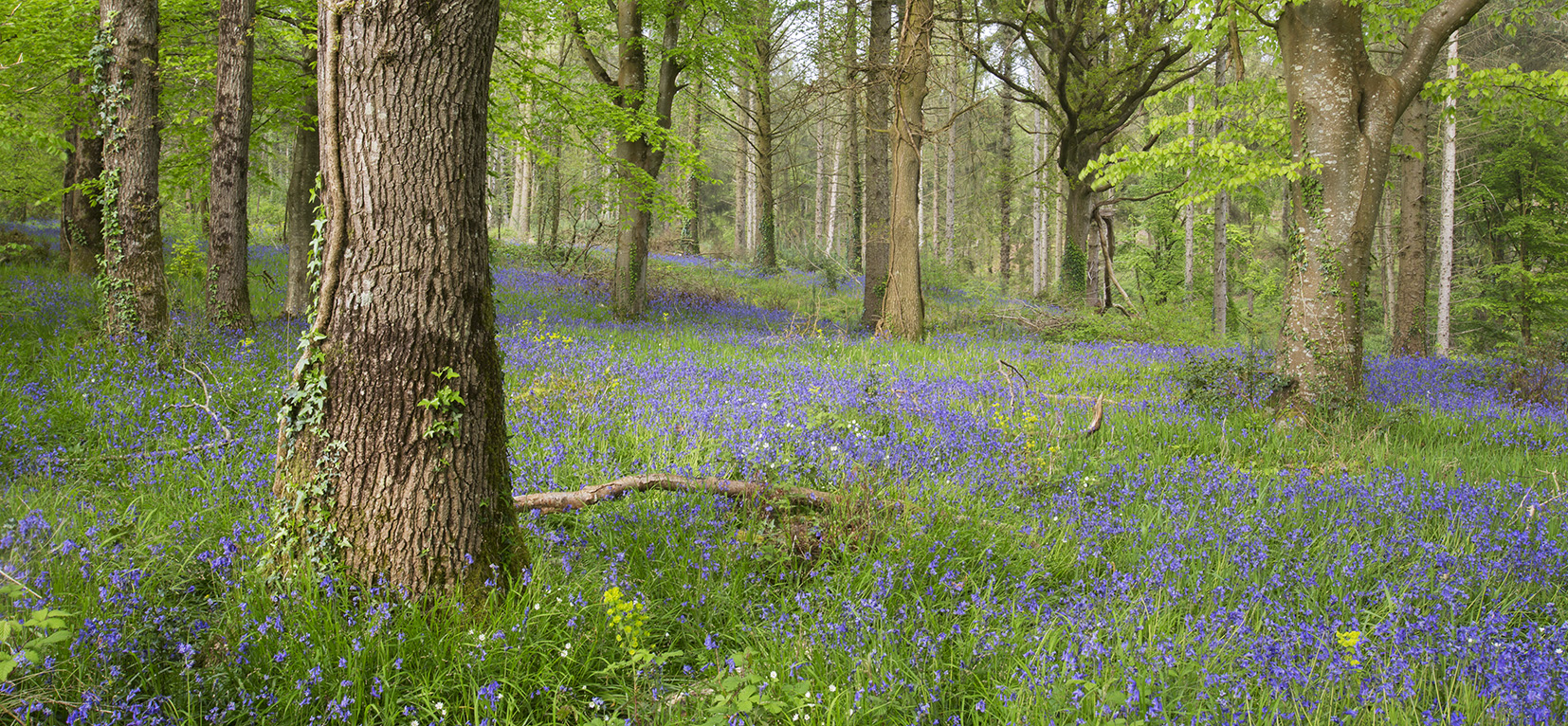
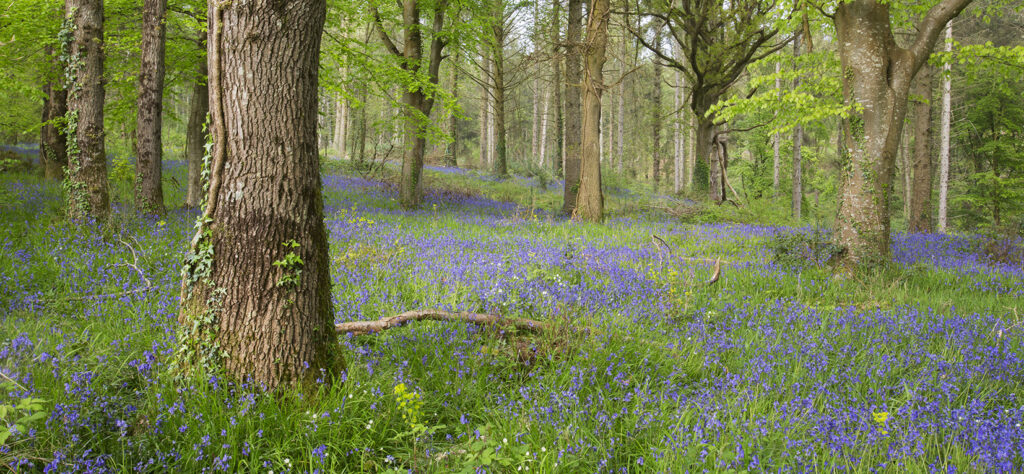
Bluebell woods, east Devon, Clinton Devon Estates. Credit Matt Maran

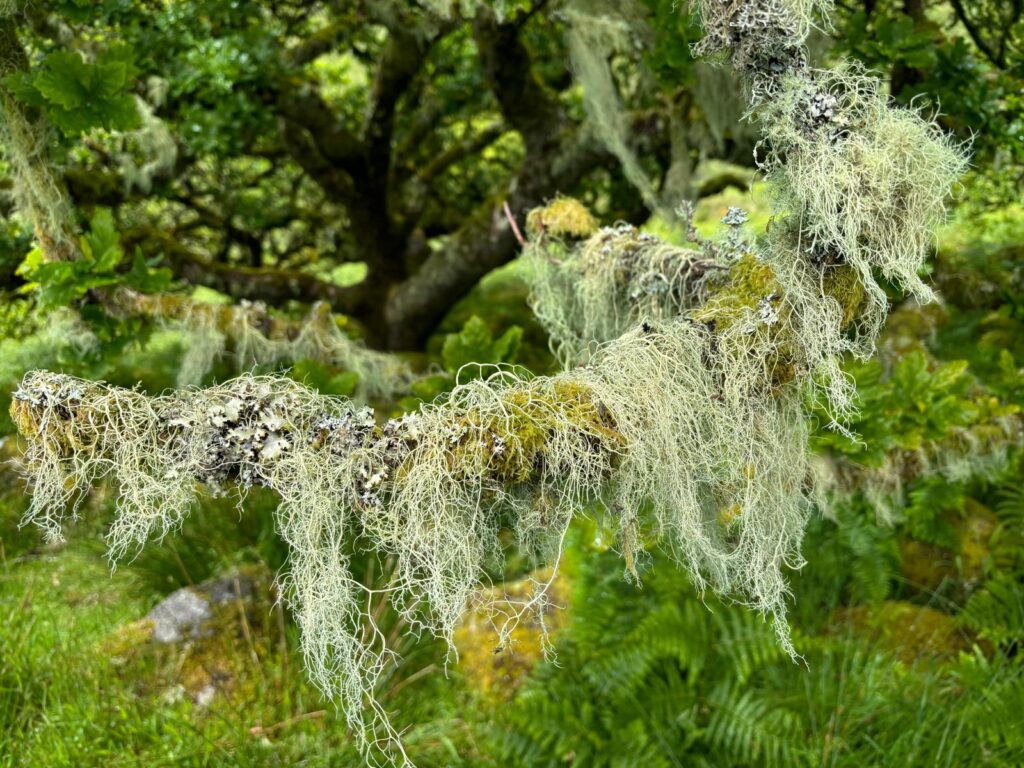
Wistman's Wood, Dartmoor. Credit: Emma Simmonds

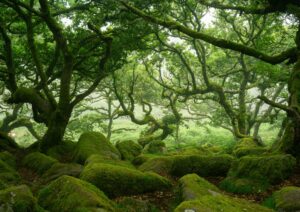
Wistman’s Wood, Dartmoor. Credit: Emma SImmonds

Snapshot for broadleaved woodland

What wildlife-rich looks like: 

Wildlife-rich broadleaved woodlands are all about variety, both in woodlands and between them. They include trees of different species and ages, varying levels of light, lots of standing and fallen deadwood, leaf litter, open sunny flower-rich glades within the woods and areas of dense scrub, wetlands and streams on their edges.

Temperate rainforests thrive in areas with high levels of rainfall and are rich in bryophytes (mosses and liverworts), ferns and lichens.
Devon Special Species include:

Mammals:  Bechstein’s Bat, Barbastelle, Hazel Dormouse, hedgehog, Pine Marten. Note that woodlands are important feeding areas for Lesser and Greater Horseshoe Bats, Grey Long-eared Bat and Serotines.

Birds: Lesser Spotted Woodpecker, Pied Flycatcher, Wood Warbler, Marsh Tit, Spotted Flycatcher. 

Moths and butterflies: Wood White, Pearl-bordered, High Brown and Heath Fritillaries, Dartmoor oak wood moths.    

Other invertebrates: Six-spotted Longhorn Beetle, Blue Ground Beetle, upland rainforest snails.

Plants, lichens and fungi: Bastard Balm, rare whitebeams, rainforest lichens.

UK significance:

UK priority habitat: Lowland mixed deciduous woodland and upland oak woodland. 

Statutory irreplaceable habitatAncient woodlands and veteran trees.

Devon is a stronghold for temperate rainforest, one of the UK’s rarest habitats.

Wider benefits: Timber and wood fuel, carbon storage, flood prevention, water quality, air quality, pollinators, landscapes and tourism.

1. About

Before humans began woodland clearance, wild broadleaved woodland, known as wildwood, covered much of Devon. However, it looked very different to the small, isolated patches of woodland we see today. Grazing herbivores and natural processes such as flooding and disease would have created a continuous, dynamic mosaic of wildlife-rich, woody and open habitats, including flower-rich grasslands, heathlands and wetlands.

Woodland clearance isn’t a new thing. Humans began serious clearance of Devon’s woodlands during the Bronze Age (around 2500 – 800 BC). By 1086, only around 4% of Devon was wooded (however it’s likely that trees outside woodlands would have been dominant in the landscape). Our remaining woodlands have been carefully managed for 1,000s of years. Initially this would have been small-scale management for firewood and timber, but it increased from the 17th century as charcoal was needed for the industrial revolution and timber for ship building. Coppicing was common and created open areas in woodlands allowing light-loving species to grow. Areas were often coppiced in a rotation, creating mosaics of habitats of different ages and providing conditions needed by different species. Woodland management also favoured certain tree species such as oak, which is dominant in many of Devon’s woodlands.

Today, around 8% of Devon is covered in broadleaved woodland, 1% of which is ancient woodland. These include exposed upland and coastal woodlands (our classic temperate rainforests, dripping with mosses and lichens), more sheltered bluebell woods, ash woodlands on limestone soils and river corridor and estuarine woodlands, which form a critical part of our river ecosystems. For more information see the drop-down below.

The majority of woodlands are small and often isolated in agricultural or urban landscapes, causing issues for species which are poor at dispersing such as many species of lichens and non or weak-flying invertebrates. Lack of management is leading to a lack of diversity of habitats in woodlands and long-term recording has shown huge declines in species such as woodland bats, birds, butterflies, specialist invertebrates, bryophytes and lichens. See Key pressures and opportunities below for more information.

However, our woodlands are of critical wildlife value and support 1,000s of species. They remain a stronghold for iconic species such as Hazel Dormice and woodland birds such as flycatchers and woodpeckers. See the Devon Species of Conservation Concern spreadsheet in Information to find out which need woodland habitats.

See other pages for information on Wet woodland, Wood pasture and parkland, Conifer plantations, Ancient and veteran trees and Traditional orchards.

Woodlands vary, depending on the soil (for example its pH, nutrients and depth), climate, hydrology and management. 

Exposed upland and coastal woodlands

Wistman’s Wood and Black Tor Copse (both part of Dartmoor SAC) are small relicts of Dartmoor’s ancient high oak woodlands. The harsh, wet climate and poor acid soils support stunted, gnarled oak trees, some shrubs and a few acid-loving plants, such as Bilberry, Hard Fern, Great Wood Rush and bracken. Cool, damp conditions and clean air provide perfect conditions for rare lichens and mosses. High rainfall creates acidic, nutrient-poor bark, which supports a group of very rare lichens known as the upland rainforest lichens.  

Similar woodlands are found on the north-facing seacliffs on the Clovelly and Hartland coast, where the harsh Atlantic environment causes wind-stunted oak trees to grow on maritime heathland. 

Sheltered upland and coastal woodlands

As conditions become less harsh, Devon’s upland and coastal woodlands grade into a more lowland community. These woods have shrubs such as hazel, holly and rowan and a richer ground flora of grasses, bluebells and wood sorrel.  

On the edges of Dartmoor, these woodlands include Yarner, Bovey Valley, Hembury, Sampford Spiney, Shaugh Prior, Teign Valley and Holne (all of which are part of the South Dartmoor SAC) and lower parts of Dendles Wood. They’re largely ancient oak and hazel woodlands, which have evolved from historic coppicing. However, some are secondary woodlands which have grown on abandoned commons.  

Many are found in wildlife-rich mosaics with areas of heathland and acid grasslands. Open areas with bracken and violets support the rare High Brown and Pearl-bordered Fritillary butterflies. Cow-wheat is one of the main foodplants for Heath Fritillary butterflies. This butterfly is now only found in one site on the western edge of Dartmoor. Wild daffodils can be seen in some woodlands. Large wood ant nests are common. Birds include Pied Flycatchers, Wood Warbler and Common Redstart. Ash, Small-leaved Lime and Wild Service Tree are found in areas with more base-rich soils.  

Where these woodlands are found along rivers, where the humid microclimate supports lichens, bryophytes and ferns such as Royal Fern and the Tunbridge Filmy-fern. 

Watersmeet, found on the East Lyn river on the Exmoor coast, is one of the largest remaining semi-natural ancient woodlands in south-west England. It has a classic sequence of woodlands, from well-drained poor soils on valley tops to deeper and wetter soils lower down, with alder and willow wet woodlands. The woodlands are dominated by oak though Wych Elm is also present. Watersmeet supports rare whitebeams as well as rare lichens and upland woodland birds.

The bark in these humid, sheltered woodlands is less acidic than in exposed woodlands and supports a different group of very rare lichens. Lichen experts call these woodlands ‘southern oceanic woodlands’.

Lowland woodlands

Devon’s lowland woodlands are found across the county, again often in steep river valleys or on poorer soils where land hasn’t been cleared for agriculture. The species mix is similar to the more sheltered Dartmoor and Exmoor woodlands with oak, ash and hazel, honeysuckle, bramble and ivy. The ground flora can include bluebell, wood sorrel, wild garlic and ancient woodland indicators such as Woodruff, Sanicle, Yellow Archangel, Wood Spurge and Opposite-leaved Golden Saxifrage in wetter areas. These woodlands support Hazel Dormice and a wealth of species such as specialist woodland bats (including Bechstein’s and Barbastelle) birds and invertebrates. They occur across Devon and examples include the woodlands of the south Devon estuaries such as the Dart and Erme.

River corridor woodlands provide critical wildlife corridors and are a key part of the river ecosystem. They stabilise banks, reduce pollution and regulate water temperature. Tree roots and woody debris falling into watercourses provide important habitats. See Watercourse corridors for more information. In wider, flatter floodplains, riparian woodland has been lost and what remains is often fragmented or a line of bankside trees. 

Calcareous soils

Woodlands found on limestone soils (Torbay, Plymouth and Kingskerswell) and chalk (east Devon coast) support a mix of trees that, until recently, would have been dominated by ash. Field Maple is often present and the ground flora includes species such as Dog’s Mercury, which isn’t typically found on acid soils.

Temperate rainforests

Temperate rainforests are globally rare woodlands that are found in areas that are influenced by the sea, with high rainfall and humidity for much of the year. They are particularly important for ferns, bryophytes (mosses and liverworts) and lichens, some of which are rare. Within England they largely occur in Devon, Cornwall and Cumbria. .

In Devon they are largely found in the wetter west, uplands and coastal areas. Examples include Wistman’s Wood, Black Tor Copse and Piles Wood on Dartmoor; the coastal woodlands around Clovelly; woodlands along Exmoor valley such as Heddon and Arlington and woodlands along the southern Dartmoor river valleys such as at Holne.

Many of our temperate rainforests are also ancient woodlands…..

Ancient woodlands

Devon’s most species-rich broadleaved woodlands are ancient, semi-natural woodlands that have been in existence since at least 1600. Because they’re more than 400 years old, ancient woodlands provide a continuity of species, habitats and soils that may date back to the original Devon wildwood. They make up just over 1% of land in Devon and are concentrated on steeper land around rivers, estuaries and moorland edges where the ground is harder to clear and less suitable for agriculture and development.

The mosaic of habitats and structural diversity in and between woodlands is essential for wildlife.

Ancient and veteran trees: One of the most critical and species-rich elements of all woodlands, ancient and veteran trees provide habitat for 1,000s of species, particularly invertebrates that are food for species such as bats and birds. Old trees often have cracks and loose bark that provide roosts for rare bats such as Barbastelle and Bechstein’s and holes where birds such as Pied Flycatchers, owls and woodpeckers nest.

Deadwood and leaf litter: Standing and fallen deadwood are both important and used by different species, particularly invertebrates, fungi and lichens. Devon Special Species that rely on deadwood include deadwood lichens, the Blue Ground Beetle and the Six-spotted Longhorn Beetle. The Dartmoor ancient oak moth group depend on leaf litter, deadwood and fungi. The nationally scarce Wood Cricket (a Devon Species of Conservation Concern) likes deep leaf litter in woodland clearings. See links in What we need to do and where below. The Ancient and veteran tree page has more information on deadwood.

Well-lit tree bark: Tree bark supports a wealth of rare lichen communities. Acidic bark in exposed upland and coastal woodlands (upland rainforests) supports rare species in the Parmelion lichen community. The only locations for the Horsehair Lichen in the UK are Black Tor Copse and Wistman’s Wood on Dartmoor. Less acidic bark in more sheltered woodlands (known as southern oceanic woodlands) supports specialist species in the Lobarion lichen community.

A mix of shady and sunny glades, rides and edges: These areas provide pollen and food plants for invertebrates such as the very rare Heath Fritillary Butterfly caterpillar that feeds on Cow-wheat and the Wood White Butterfly that feeds on vetches in dappled shade. Unlike other grasshoppers, the nationally scarce Woodland Grasshopper prefers woodland rides and areas of grassy scrub.

Native species: Wildlife living in woodlands has shaped the mix of native broadleaved trees and shrubs (such as oak, ash, elm, hazel and birch) and ground flora. For example, White Admiral Butterfly caterpillars feed exclusively on honeysuckle (which Hazel Dormice use to build nests) and White-letter Hairstreak caterpillars feed on elm. 

Shrub layer: Some species, such as Pied Flycatchers, Wood Warblers and the Blue Ground Beetle, prefer open woodlands with a sparse shrub layer. Other species, such as Marsh Tits and Lesser Spotted Woodpeckers, prefer a dense shrub layer. Therefore, we need mosaics of different habitats in our woodlands, which rotational management can achieve.

Bracken and violet habitats on woodland edges and in clearings: These habitats provide shelter and food plants for the caterpillars of the Pearl-bordered Fritillary and High Brown Fritillary butterflies.  

Connectivity and wooded landscapes: Because Hazel Dormice live in trees and shrubs and rarely touch the ground, they need connected habitats so they can disperse and find new habitat. Species such as lichens and bryophytes are very poor at dispersing and need a continuity of trees with varying age ranges in close proximity. Declining bird species such as Lesser Spotted Woodpeckers need large, mature woodlands or well-wooded landscapes.

Lots of invertebrates: Species such as bats and birds rely on a constant supply of small invertebrates, which in turn rely on a mosaic of microhabitats.

This is draft – to be finished following Consultation to ensure latest data from NE and DBRC.

Area

There are 55,235 ha of broadleaved woodland in Devon, covering 8% of the county. This represents 69% of total woodland cover (the rest being conifer or mixed). 15% of this broadleaved woodland is ancient semi-natural, covering 8,492 ha, or 1.2% of the county.

Area under management

Woodlands under management generally have a greater variety of habitats within them and are better for wildlife.

in 2025, 47% of Devon’s woodlands were assessed by the Forestry Commission as being under some form of management (having either a management plan or felling licence). However, even where management plans are in place, there is no requirement that the works actually take place and 47% may be a significant over-estimate, or the number of woodlands being managed may be greater than 47% as small areas of woodlands can be felled without a licence or management plan in place.

Designations and condition

Statutory designations

46 broadleaved woodlands are designated as SSSIs in whole or part. These cover around 3,700 ha. Examples are Wistmans Wood, Hembury Woods (on Dartmoor), Warleigh Woods (on the Tamar) and Horner and Hawkcombe woods (on Exmoor)

Need to add SACs – South Dartmoor Woods.

67% of SSSIs are recognised as being in favourable condition and 31% as unfavourable or recovering. Consultation Q: What are the key reasons for being unfavourable?

County Wildlife Sites (CWS)

740 CWS in Devon have broadleaved woodland (just lowland?)

CWS data for lowland mixed deciduous woodland shows that of 179 sites monitored, 72 (40%) were assessed as green, 100 as amber (56%) and seven as red. Issues include inappropriate grazing by livestock, dominance of invasive species and heavy shading from species such as holly. 

Key pressures and opportunities

Devon’s woodlands have been managed by humans for thousands of years, for fuel, timber, farming and food. Although this management changed the makeup of the woodlands, rotational coppicing replicated natural processes by creating a varied age structure in and between woodlands. Today, woodlands are ideally managed through continuous cover forestry, which ensures that the woodland retains or develops a strong, nature-rich, structure. Some of Devon’s most nature-rich woodlands are managed for timber, such as those managed by the Perridge Estate, the Clinton Devon Estates and the National Trust and Woodland Trust at Fingle in the Teign Valley.

However, 53% of Devon’s woodlands are thought to be unmanaged and only 30 hectares are recorded as being actively coppiced. Management of woodlands at scale can be costly and markets for broadleaved woodland products are limited, apart from firewood and some specialist timber outlets.

There are opportunities to develop markets for broadleaved timber to support the management of broadleaved woodlands. Specialist timber manufacturing (as demonstrated by Dartmoor’s Future Forests), alongside local firewood and some specialist charcoal markets, can all help to bring woodlands back into management. Holne Chase woodland on Dartmoor is a good example of a private owner managing a SSSI broadleaved woodland to produce timber and firewood while benefiting nature though thinning which improves light levels.

Plym Woods are being managed by Forestry England with a focus on restoring ancient woodland and selling both the broadleaved and conifer timber that’s harvested as part of the long-term management plan.

Charities, including Devon Wildlife Trust, the National Trust and the Woodland Trust all own and manage broadleaved woodland where the timber produced goes to a range of commercial uses. Woods at Holne, Hembury, Avon Valley, Dart Valley and Holnicote are all under management plans where production of timber is part of nature recovery.

Technologies, such as glulam, also offer opportunities for markets for limited amounts of broadleaved timber.    

Many of Devon’s woodlands are now small and isolated from each other. This has huge impacts on species that are poor at dispersing such as lichens, bryophytes and invertebrates such as Wood White butterflies, which are weak fliers. To meet different species’ needs, we need larger areas of woodland and more woodlands all connected by a range of habitats.

Natural regeneration: Where there is sufficient seed source in the soil and suitable site conditions, the benefits of natural regeneration include greater ecological complexity and diversity, increased resilience to climate change and disease, and avoiding the risk (with planting) of introducing new pests and diseases. Natural regeneration requires less management, less resources (no need for tree shelters, ties, containers or for growing trees and transporting them), and can be more cost effective than planting.

However if your chosen site has poor seed stock sources (e.g. if it has been intensively farmed), direct seeding can be a good option to introduce seeds while encouraging natural establishment. Natural regeneration may not always be the best option and always obtain advice. See Find out more for useful links.

There are extensive areas of plantations on ancient woodland sites across Devon. Managing these sites with systems that mimic natural processes, such as continuous cover forestry rather than clear felling, can produce nature-rich woodlands and retain commercial timber value. However, some species, such as Nightjar, rely on clear-felled open areas and so a mosaic of habitats is always needed.

Restoring PAWS is a priority in the LNRS.

Our temperate rainforests face significant challenges such as climate change, invasive species and poor management. However there is now a huge interest in these woodlands and the Southwest Rainforest Alliance (SWRA) has been set up. This is a voluntary group of conservation bodies, landowners and specialists that recognises the importance of the region’s surviving temperate rainforests and is working to protect, enhance and restore this valuable and internationally distinctive habitat.

The SWRA wants to triple the amount of high priority temperate rainforest in Devon by 2050 and to restore all of the high priority temperate rainforest in Devon by 2050. See links in Find out more below.

Ornamental non-native species (such as rhododendron, Cherry Laurel and Himalayan Balsam) and regenerating non-native timber species (such as Western Hemlock and Spruce) can spread rapidly in woodlands and suppress native trees, shrubs and ground flora.  

Broadleaved woodlands are often used for pheasant shooting. However, introducing pheasants and their feed can markedly change the native ground flora and fauna and negatively impact on nature recovery. 

Grey Squirrels strip bark, which can damage or kill young trees. Deer graze on young trees and shrubs and can prevent them from developing. Both can be a huge problem when regenerating or creating woodland. Without adequate control, the presence of both species is a significant deterrent for landowners who want to plant new broadleaved woodland. However grazing by deer can be beneficial in some woodlands and wood pastures by maintaining open areas and ensuring varying levels of light which benefit species such as lichens.

Developing venison markets provides an opportunity to help pay for deer management.

Encouraging species such as Pine Martens and Goshawks may help to control Grey Squirrels.

The accidental introduction of pests and diseases is increasing rapidly. Two of Devon’s most prolific native woodland trees, elm and ash, have been (or will be) largely lost from the landscape due to Dutch elm disease and ash dieback. 

Recreation, health and wellbeing

The health benefits of contact with the natural world are now well known. There are huge opportunities to increase appropriate access to existing woodlands and create new opportunities near to where people live. Woodlands and trees also have huge benefits in terms of absorbing pollution and noise and reducing temperatures. The importance of woodlands for health and wellbeing means that they’re an integral part of green infrastructure strategies being developed by a number of local authorities in Devon. See Connecting people and nature for more information. 

However sub-dividing woodlands to sell lots for recreational use, commonly known as wood lotting, has a significant harmful effect. It prevents woodlands being managed cohesively and brings recreational pressures.

Water quality and flooding

Woodlands are now recognised as an integral part of the solution to improve water quality and reduce flooding. This new understanding has increased funding opportunities such as the Water Restoration Fund. See Water quality and flood risk for more information.

Climate change will significantly affect the health of individual trees, the tree species that survive in woodlands and the species chosen to create new woodlands.

The urgent need for carbon sequestration and adaptation (including the benefits of woodlands in towns to regulate temperature) has opened up new opportunities for woodland creation projects. Many organisations, including local authorities, South West Water and the National Trust, now have woodland creation targets. 

The ability of trees to absorb and store carbon led to the development of the Woodland Carbon Code. This nationally-accredited scheme provides funding and incentives to create new woodland and retain existing broadleaf woodland over the long term.

The current national focus on increasing tree cover has increased funding opportunities through Environmental Land Management, the England Woodland Creation Offer and the Farming in Protected Landscapes programme. This has led to more funding for landscape-scale projects such as the Plymouth and South Devon Community Forest

A wide range of government bodies manage, fund and regulate woodland management and creation, including the Forestry Commission, the Environment Agency, Natural England, the Ministry of Defence and National Highways. However, work is not always fully coordinated and the sector can be confusing to land managers and community groups who want to take action or find funding.

There are a huge number of organisations across Devon that manage land, provide funding and work with land managers to manage and create woodlands. These organisations include the Woodland Trust, Plantlife, the Wildlife Trust, the National Trust, Southwest Lakes Trust and FWAG (the Farming and Wildlife Advisory Group).

There is huge interest among community groups to manage and increase woodland cover across Devon and groups are being set up to work on specific woodlands, such as Axewoods in east Devon. See Find out more below for more information.

2. What we need to do and where

Priority

Better (wildlife-rich), bigger, more and resilient broadleaved woodlands that are connected to a network of habitats across the landscape, benefiting ancient woodlands, temperate rainforests, Devon Special Species and achieving wider benefits such as carbon capture, health and wellbeing and water resilience.    

See Find out more below for detailed guidance and sources of funding and advice.

Actions for broadleaved woodland

Sustainably manage existing broadleaved woodlands for wildlife

  • Get ecological advice to understand the condition of woodlands and the actions needed to maintain or enhance their condition. Get silvicultural advice to develop and implement a woodland management plan in line with national best practice and guidance. See Find out more below.

Management actions for all woodlands include:  

  • Ensure that woodlands have a varied physical structure and mix of native species of different ages. Actions include thinning, coppicing and creating open rides and glades, scrubby woodland edges and wetlands. Phase action to create variation, with some areas under management, others regenerating and some that have minimum intervention. Consider reinstating coppicing where this was previously done. 
  • Leave standing and fallen deadwood in place.
  • Manage ancient, wildlife-rich features such as ancient trees and banks.
  • Control invasive species and implement rigorous biosecurity measures. Invasives include non-natives such as rhododendron and laurel and natives including ivy, bramble and holly that can swamp other ground flora and/or shade tree trunks.
  • Control deer and Grey Squirrel populations.
  • Manage adjacent land to reduce impacts such as light pollution and pesticide and fertiliser drift. 
  • Manage woodlands to improve water quality and flood control. Where appropriate manage woodlands to provide recreational opportunities.
  • Develop and implement a grazing plan where appropriate.
    • Understand the ecological condition of, and herbivore pressure, within the woodland. Where grazing is appropriate ensure that stock breeds, stocking rates, season and duration of grazing will benefit wildlife and allow natural regeneration to occur.
  • Manage pheasant shoots following national best practice guidance. Measures to prevent negative impacts include:
    • Maintaining sustainable stocking numbers; taking precautions to minimise impacts on watercourses and ground flora; carefully siting pens; managing feed stations and pests and; avoiding the use of invasive, non-native shrubs as ‘game cover’. For more details follow links in Find out more.

Expand or create broadleaved woodlands to increase connectivity. Where more appropriate create other wildlife-rich habitats adjacent to woodlands to develop mosaics.

  • Develop and implement new woodland creation plans in line with national best practice and guidance. See Find out more below.
  • Use native species. Include non-native trees, if appropriate, to support ecological function and improve resilience. Follow the right tree in the right place principle, based on soils and other physical factors.
  • To ensure climate resilience, use mainly stock of local provenance (seed comes from trees local to the site) and a small proportion of stock of non-local provenance including southern European countries.
  • Adopt a suitable establishment approach, including measures to protect young trees. Use natural regeneration where seed sources are present. See more on natural regeneration in Find out more below. 
  • Implement rigorous biosecurity measures such as sourcing trees from Plant Healthy or nurseries under the UK and Ireland Sourced and Grown Assurance Scheme.
  • Design and plant new multifunctional woodlands that deliver for wildlife, climate resilience and other outcomes such as timber, water quality, flood control and recreation.

Develop and implement collaborative, landscape-scale approaches to squirrel control and deer management, including the development of supply chains and new markets for venison.

  • There’s a need for landscape-scale control measures for deer and Grey Squirrels. To succeed, programmes need an organisation or individual to provide the impetus and co-ordinate action over an extended area and for the long term.

Infrastructure, skills and advice

  • Support tree nurseries and community projects that supply trees and shrubs grown from local seed. 
  • Promote best practice, including sites that demonstrate successful broadleaved woodland management such as Holne and Hembury Woods.
  • Strengthen existing and develop new markets for broadleaved timber, such as a quality-accredited markets for firewood and biomass and new structural uses for timber.
  • Develop a joined-up advice service for land managers.
  • Where appropriate, local authorities should enforce against changes of use in woodlands from subdivision (wood lotting) and raise awareness among new owners about the importance of sensitive woodland management.

Where to focus action

Wildlife will benefit from these actions being implemented across Devon. However, actions are prioritised to the following High Opportunity Areas. See Mapping .

  • Ancient and other broadleaved woodland (existing)
  • Plantations on ancient woodland sites (existing)
  • Ancient wood pasture and other wood pasture and parkland sites (existing)
  • Temperate Rainforests (existing) – Please see the South West Rainforest Alliance website for their latest mapping on temperate rainforest opportunity areas.
  • Woody habitat expansion areas
  • Watercourse corridors

Actions should also be guided by the following Opportunity Areas and to woodlands supporting Devon Special Species (see species pages):

  • Mammals: Bechstein’s Bat
  • Birds: Pied Flycatcher and Wood Warbler woods
  • Butterflies: Wood White, Pearl-bordered Fritillary, High Brown Fritillary, Heath Fritillary
  • Water quality and flood risk opportunity areas

Advice should be obtained before any woodland creation takes place in the following High Opportunity Areas and Species Opportunity Areas to ensure that it complements and supports existing wildlife:

  • All areas in the Wildlife-rich grassland mosaic group
  • All areas in the Heath, mire and rush pasture mosaics group
  • All areas in the Upland bog, heath and mire mosaics group
  • Coastal habitats and Coastal Wildbelt
  • Dartmoor breeding wader recovery zones
  • Whinchat zones
  • Wintering estuarine birds
  • Teign Gorge rock spiders
  • Greater Horseshoe and Grey Long-eared Bat sustenance zones
  • Marsh Fritillary and the Narrow-bordered Bee Hawk-moth zone
  • South Devon arable plant zone

Important: Always check that actions won’t conflict with statutory requirements (for example, statutory wildlife sites such as SSSIs or scheduled monuments) or harm existing wildlife habitats, the historic environment or landscapes. See the Environmental sensitivities page for more information.

3. Inspiration

Case studies

Timber production and nature recovery

Landowners across Devon are managing broadleaved woodlands to both produce timber and help nature recover. Clinton Devon Estates, Tavistock Woodlands and the Perridge Estate are examples of how commercial woodland management and nature recovery can work together.

Managing and creating broadleaved woodlands

Several charities manage broadleaved woodland with nature recovery as a priority. The Woodland Trust, Devon Wildlife Trust and National Trust all manage woodlands with key sites in the Avon Valley and on Dartmoor, Exmoor and in the Avon Valley.

New broadleaved woodlands are being created across Devon. Recent examples include Yonder Oak near Exeter, which was created by the Woodland Trust, and Wembury and South Brent, which was created by the Plymouth and South Devon Community Forest in partnership with the National Trust and South Hams District Council.

South west rainforest lichen recovery project

Funded by Natural England’s Species Recovery Programme, this partnership project between Plantlife, the Woodland Trust and the National Trust set out to recover populations of 21 key rainforest lichen and moss species across South West England. Restoration techniques were carried out across 12 sites and included: halo thinning, glade management, tree veteranisation, dense understory thinning and invasive non-native species control. All of these practices support rainforest species by diversifying the structure of the woodland, suppressing threats, improving light levels and opening up new niches for populations to expand into.

Plantlife is committed to future training events for consultants, contractors and volunteers to continue growing the legacy of this impactful rainforest restoration project.

Woodland with lots of moss, lichen and blue skies behind.

If you’re doing something to help nature thrive, please share it on the Devon Nature Recovery Delivery map to inspire others to take action.

Where to visit

Always follow the Countryside Code and keep to footpaths and sites that are managed for public access. 

Find a wood

There are lots of accessible woodlands across Devon. Explore the Woodland Trust’s interactive map to discover every publicly accessible wood near you (and across England!). Also see the Explore Devon website.

Mystical mossy temperate rainforest, in varying shades of green.

Hembury and Holne Woods and Yarner Woods

Hembury and Holne Ancient woodlands on the southern edge of Dartmoor and managed by the National Trust. They, they feature oak, beech and hazel trees along the River Dart. Visitors can explore a network of trails ranging from gentle riverside walks to more strenuous climbs up to the Iron Age hillfort at Hembury Castle.

Yarner Wood, on the eastern edge of Dartmoor near Bovey Tracey, is a tranquil ancient woodland rich in wildlife and history with accessible trails and bird hides. Part of the East Dartmoor National Nature Reserve, it’s home to oak and birch trees, Pied Flycatchers, woodpeckers, and remnants of 19th‑century copper mining.

4. Find out more

The Devon Tree and Woodland Strategy (2024) can be found on the Devon Local Nature Partnership website

The Woodland Wildlife Toolkit has advice on managing woodlands for wildlife, in particular rare and declining species that are dependent on woodland habitats.   

Undertake management in accordance with United Kingdom Forestry Standard (UKFS) and

 Forestry Commission Woodland Management Guidance to maximise opportunities for public funding. 

Woodland Condition Assessment.

The Ecological Site Classification (ESC)

Forest Research advice on management of native and ancient woodland is at FR Guidance

National Forest Inventory (NFI) is an ongoing programme to monitor UK woodlands and forests with surveys conducted every 10-15 years by Forest Research.

 Detailed advice and support on management can be found FC Lowland Guidance, Continuous Cover Forestry and CCF summary

Forest Research guidance on riparian woodland Creating and managing riparian woodland

The Woodland Trust provides advice on selecting suitable native tree species.

All planting must consider the soil type. Many previous planting that did not adequately understand the soil failed as a result. Forest research’s online mapping system provides information on the suitability of a wide range of tree species based on a site’s soil characteristics – but relies on correct information being input. The system factors in likely climatic changes, so recommended tree species should survive warmer temperatures, drier summers and wetter winters than today.

Further information on Upland Oak woodlands in Devon

SW Rainforest Alliance is working to restore and expand Temperate Rainforests and launched its ‘State of the South West Rainforest’ report in 2025. The report outlines the current condition of our temperate rainforests and provides a collaborative road map for their restoration and expansion.

See Plantlife’s website for lots of information on temperate rainforest.

Ancient Woodland Inventory (AWI) – A database/map of over 52,000 ancient woodland sites in England. Ancient woodland is woodland that has existed since at least 1600 in England. See Natural England for more details.

Ancient Semi-Natural Woodland (ASNW) has grown naturally from seed or coppice regrowth.

Plantations on Ancient Woodland sites (PAWS) are native woodlands that have been felled and replaced by non-native (mostly conifer) species. These sites have ancient woodland soils (although modified by conifers) and most have some features such as ancient boundaries or ancient trees.

There are lots of groups across Devon and a few examples given below.  See WAD pages on the LNP website for more information on community wildlife groups across Devon.

Axewoods is a not-for-profit volunteer organisation that aims to provide free woodland management to local farmers, charities, landowners and organisations.

The Devon Tree and Woodland Strategy (2024) includes targets for Devon based on the national targets below.

There are a range of national and local targets that set the context for nature recovery for Broadleaved Woodlands.  These include:

Better

– Long Term. 95% at JNCC Favourable Conservation Status

– Long Term. 80% in good condition as per Woodland Condition Assessment

– Long term. Woodlands in active management for biodiversity, climate and sustainable forestry

– Short Term. 70% of woodlands in active management by 2030

– Short Term. Majority of PAWs in restoration by 2030.

Bigger, connected and more

– Long Term.  Expanded as part of 16.5% woodland cover by 2050

– Short term.  Part of 3,000 ha’s of new woodland by 2030

Devon’s broadleaved woodlands are made up of the following National Forestry Inventory categories – see xxxx for further details    
– Broadleaved.  50,011ha
– Active coppice.   30ha
– Low density woodland.  151ha
– Shrub.   394ha
– Assumed woodland.   1,787ha
– Young trees.   2,802ha
– Failed woods.  60ha.
 
Note that these figures will include single species plantations, especially beech but also increasingly small areas of other species such as eucalyptus.

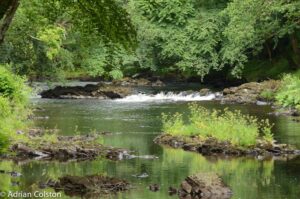
  • Hembury woods, River Dart – Adrian Colston
  • Rainforest, Lee Cooper

Draft